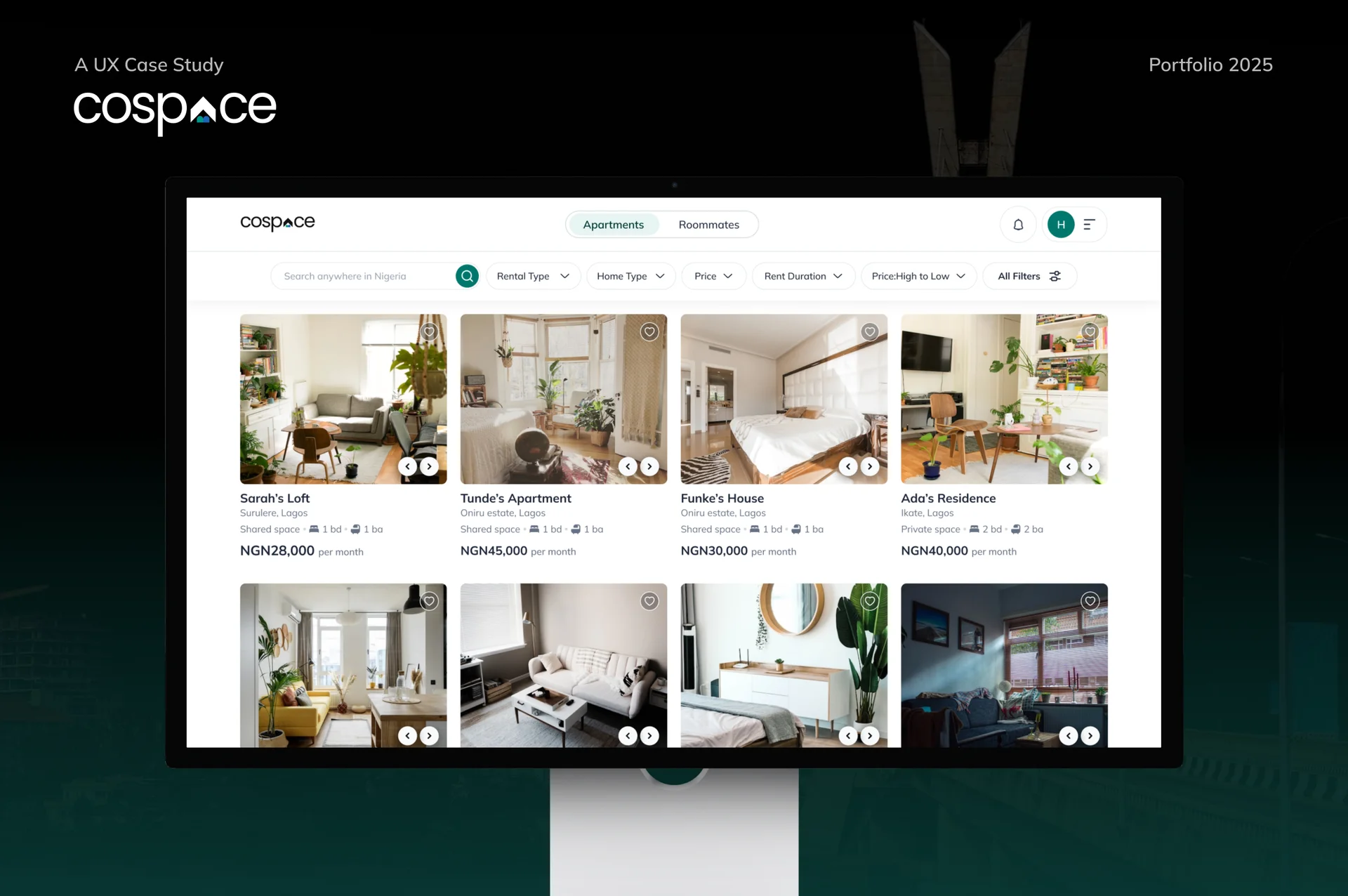
CoSpace
Making the house hunting journey less complicated for renters in Lagos
Role
Product Designer
Duration
4 weeks
Year
2025
Tools
Figma
Overview
150+ pre-launch waitlist signups
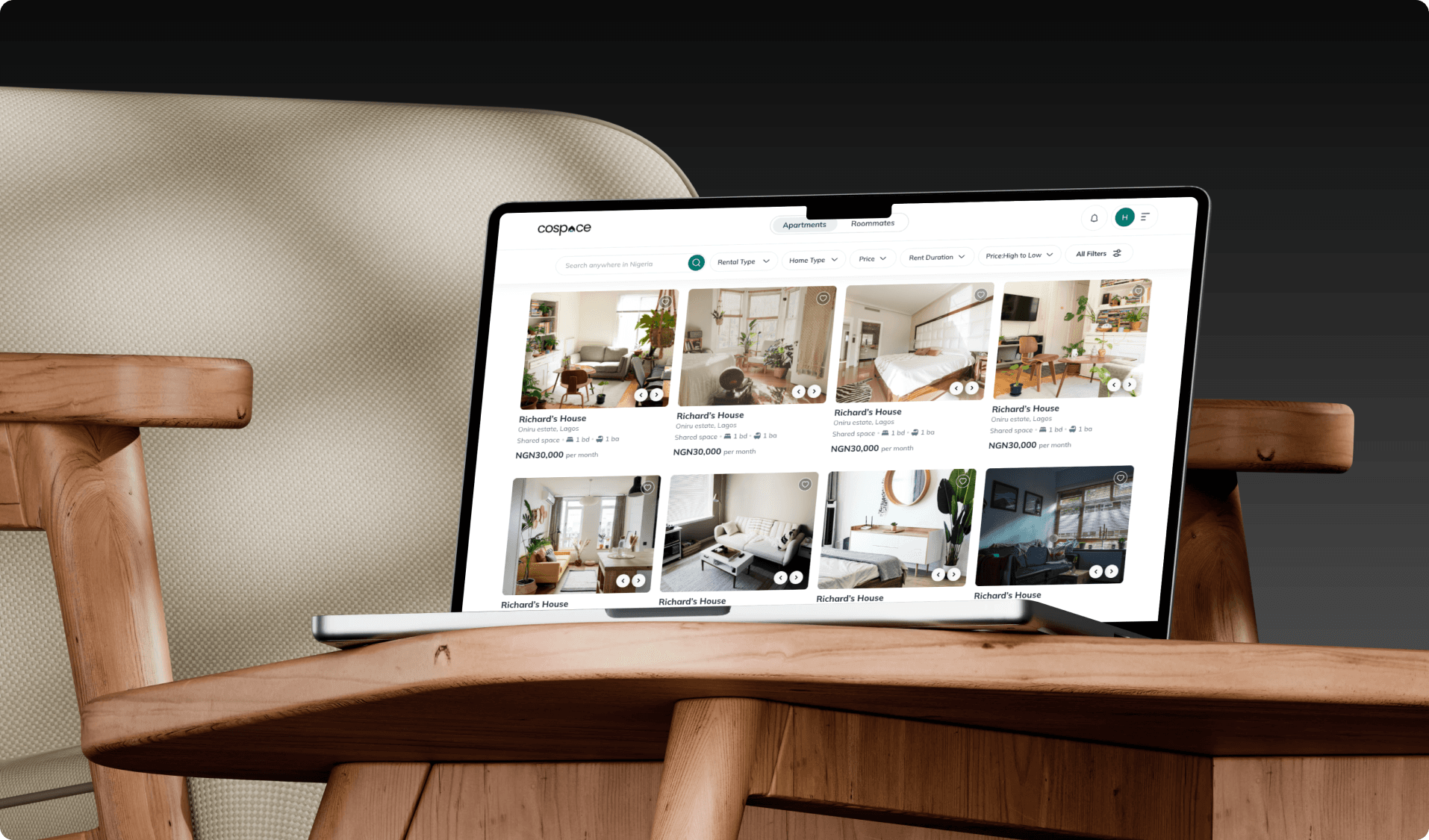
I designed CoSpace to make finding a home in Lagos less stressful and less costly. Renters often rely on agents, fragmented listings, and repeated inspections, paying fees without any guarantee of securing a home. CoSpace enables direct connections between renters, homeowners, and potential roommates, reducing friction and helping people make clearer housing decisions.
Task completion confidence
90%
Pre-launch signups
150+
User interviews
12
Design duration
4 Weeks
Prototype
Tap to expand
The Problem
Inspection fee fatigue
Renters paid repeated inspection fees across multiple apartments with no guarantee of securing any of them. Money was lost before they ever moved in.
Average fees lost before finding a home
50k - 200k
Agent dependency
Renters relied heavily on agents who controlled access to listings. This created a power imbalance where renters had little visibility or choice.
Relied on agents to find a home
85%
Fragmented listings
Available apartments were scattered across WhatsApp groups, Instagram pages, and word of mouth. There was no single place to compare options.
Sources checked before deciding
4-6 sources
“I spent months looking and paid inspection fees on five different apartments before I finally found one. It shouldn't be this hard.”
Goals
What success needed to look like
We needed to build a platform that removed the middlemen and gave renters direct access to verified listings, real information, and potential roommates.
What we were aiming for
Access
Direct connections
Agent gatekeeping
Renters had to go through agents who controlled access to listings and charged fees at every step.
Direct contact
Renters connect directly with homeowners and potential roommates, cutting out unnecessary middlemen.
Trust
Verified listings
Fake listings
Scams and misleading listings were common, making renters hesitant to commit or share personal info.
ID-verified listers
Every lister submits government-issued ID before their listing goes live, building platform-wide trust.
Cost
Transparent pricing
Hidden fees
Repeated inspection fees with no guarantee of success drained renters' budgets before they ever moved in.
Fee-free browsing
Browse, filter, and contact listers without paying to just look at an apartment.
Process
How the design came together
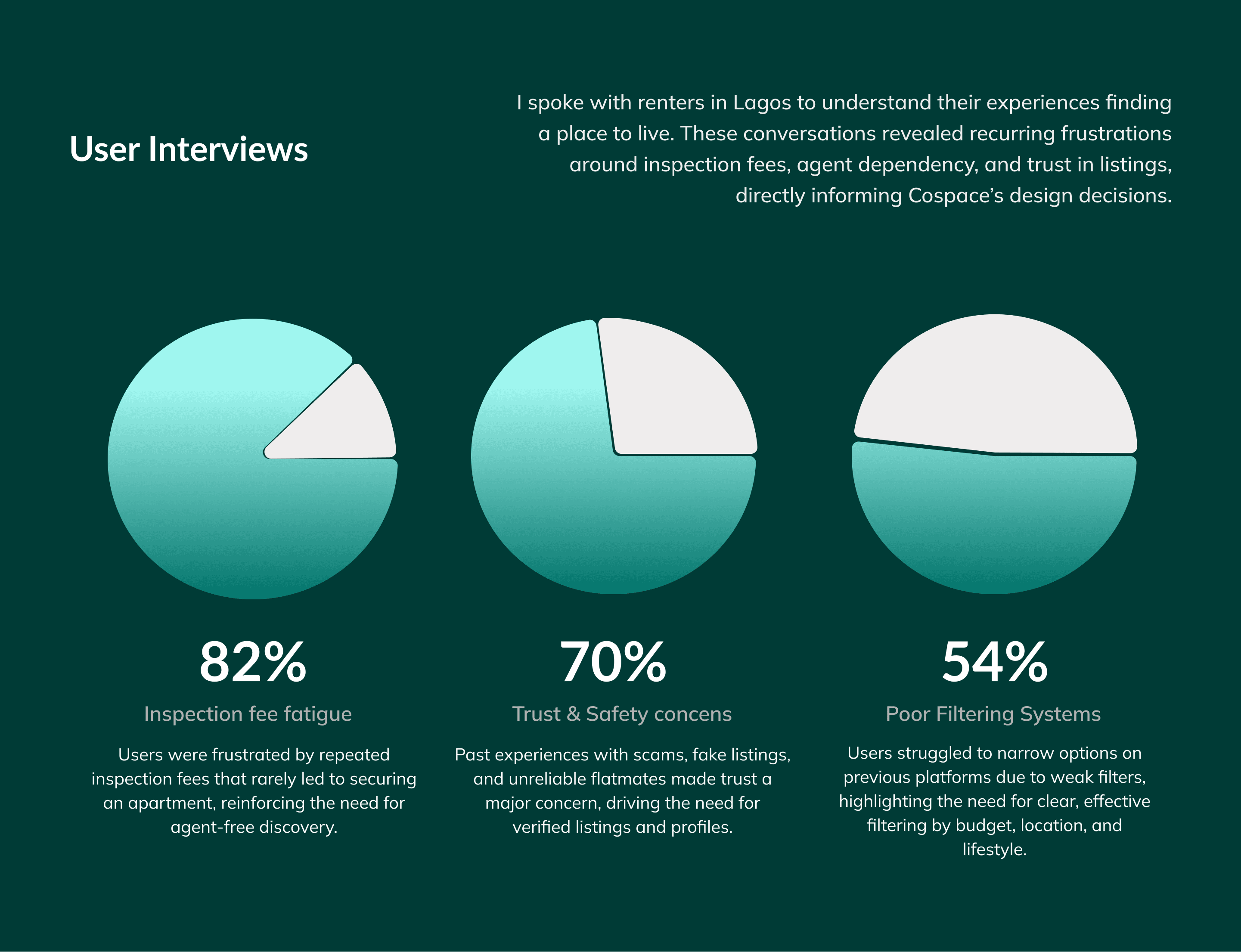
Research & Discovery
I spoke with renters in Lagos to understand their experiences finding a place to live.
- Inspection fee fatigue from repeated fees that rarely led to securing an apartment
- Trust and safety concerns from scams and fake listings
- Poor filtering systems made it difficult to narrow down options
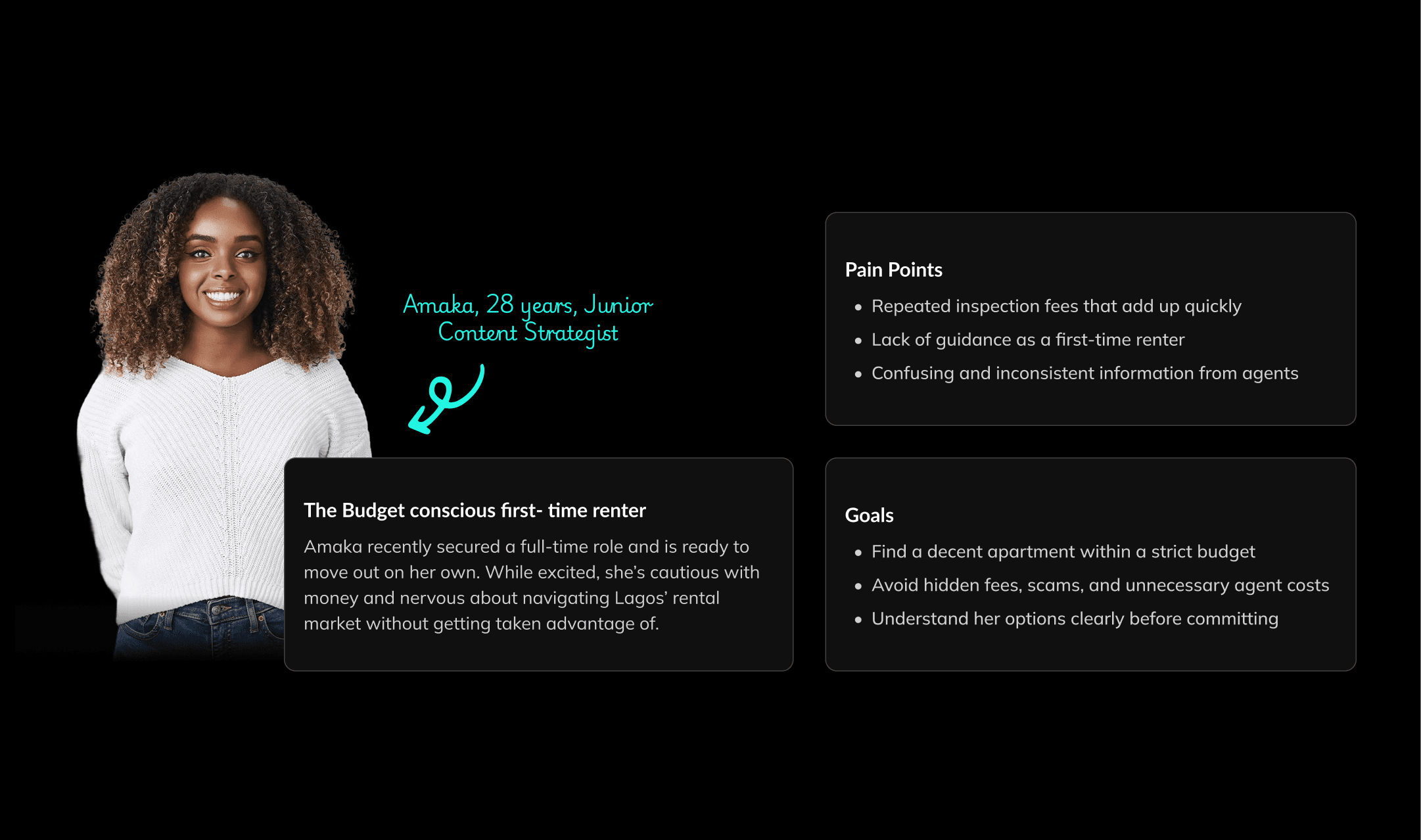
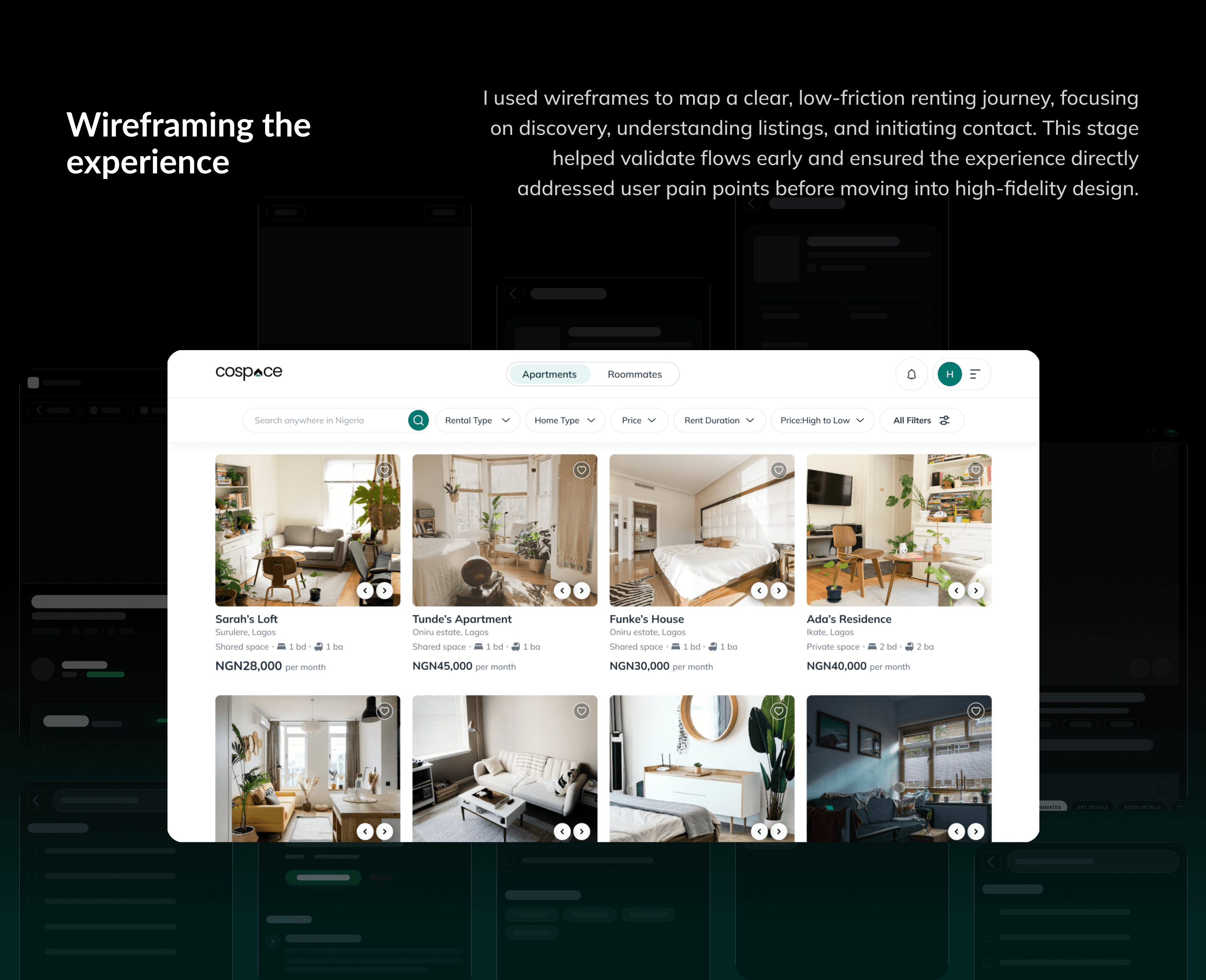
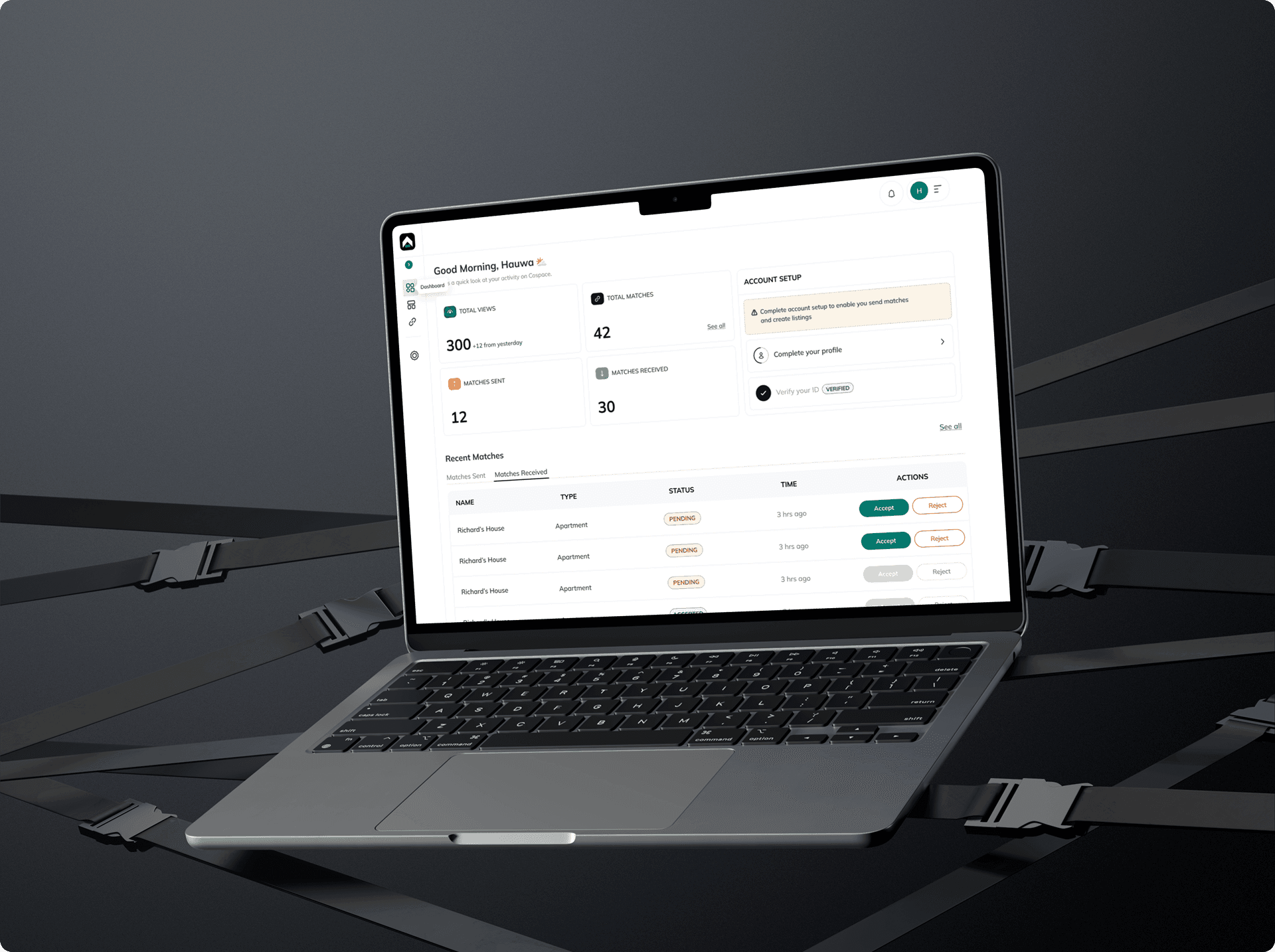

My Role
What I owned, guided, and co-created
Designed CoSpace end to end, from research through high-fidelity design, shaping the experience around trust, transparency, and direct renter-to-owner connections.
| Experience | Owned | Guided | Co-created |
|---|---|---|---|
| User research & interviews | - | - | |
| Persona development | - | - | |
| Wireframing & user flows | - | - | |
| High-fidelity UI design | - | - | |
| Identity verification system | - | - | |
| Filtering & search UX | - | - | |
| Trust & safety features | - | - | |
| Pre-launch waitlist strategy | - | - |
Outcome
CoSpace addressed key renting challenges by removing agent-led friction and enabling direct connections between renters and homeowners.
Early validation through user research and pre-launch waitlist signups demonstrated strong demand for a calmer, more transparent renting experience. The result is a focused solution that prioritises clarity, trust, and real-world renting behaviour.
90% task completion confidence
participants completed key tasks without confusion or external help
Increased trust in listings
visible verification steps and reporting reduced anxiety
150+ pre-launch waitlist signups
confirming demand for a transparent approach to renting in Lagos